
MDMA Therapy for PTSD: Clinical Research, Dosing, and Legal Access
MDMA-assisted psychotherapy is one of the most closely watched developments in mental health research because it combines a regulated medication session with structured psychotherapy, rather than relying on the drug alone. The evidence is promising, but legal access is still limited to trials and other tightly controlled pathways, so anyone exploring this option should focus on legitimate clinical programs rather than online purchase claims.
MDMA therapy for PTSD is often discussed alongside “liquid MDMA,” capsules, or other forms, but the clinical conversation is really about a carefully measured drug used inside psychotherapy, not about informal use or retail products. In research settings, MDMA is given as a standardized dose with preparation, monitored sessions, and follow-up integration, which is very different from unregulated products or self-directed use.
What PTSD Is and Why New Treatments Are Being Explored
Post-traumatic stress disorder can follow exposure to trauma and may involve intrusive memories, avoidance, negative changes in mood or thinking, and heightened arousal. Traditional treatments help many people, but not everyone responds fully or tolerates them well, which is why researchers continue exploring PTSD treatment alternatives, including psychedelic therapy research and MDMA-assisted psychotherapy.
NIMH notes that PTSD treatment research continues to evaluate better medications and psychotherapies, while established first-line care still centers on trauma-focused approaches such as cognitive processing therapy, prolonged exposure, and EMDR.
What MDMA Is and How It Affects the Brain
MDMA increases signaling in serotonin, dopamine, and norepinephrine pathways, which can change mood, arousal, and social-emotional processing. In clinical therapy, these acute effects are thought to support emotional openness, reduced fear response, and easier engagement with traumatic memories when paired with psychotherapy.
The therapeutic idea is not that MDMA “cures” PTSD by itself. Instead, it may create a temporary psychological state that helps patients work through trauma more effectively under professional supervision.
MDMA Forms Explained
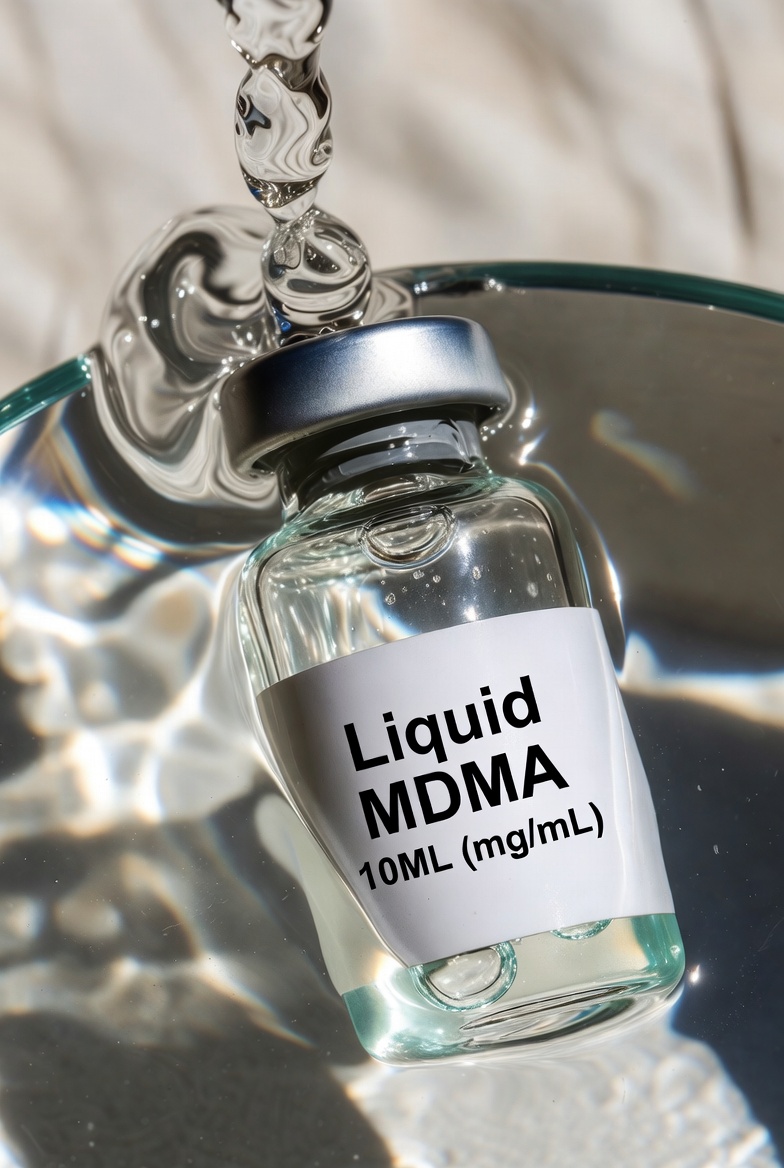
MDMA in medical research is usually supplied as a controlled oral dose, often in capsule form, because capsules support precise milligram dosing and consistency across sessions. Liquid MDMA is not a standard medical formulation, and public drug-profile information notes that liquid forms can appear in illicit contexts, which is associated with serious health risk rather than clinical standardization.
For that reason, when people search for “what is liquid MDMA” or “can MDMA be in liquid form,” the key distinction is not the container alone but whether the product is pharmaceutical-grade, measured accurately, and administered in a regulated therapeutic setting.
How MDMA-Assisted Therapy Works
MDMA-assisted psychotherapy usually follows a staged model. Clinical trials commonly include screening, several preparatory psychotherapy sessions, one or more monitored dosing sessions, and integration sessions afterward to help patients process what came up during treatment.
This structure matters because the psychotherapy is part of the treatment, not an optional add-on. In trial designs, participants receive therapy before, during, and after dosing, and the MDMA sessions are conducted with trained clinicians in a controlled environment.
The Science of Dosing
Dosing is central to the science of MDMA therapy because the goal is precision, repeatability, and safety. Clinical trials have used carefully measured oral doses with defined limits, sometimes including a supplemental half-dose, to keep session dosing consistent across participants.
Capsules are preferred in trials because they make it easier to deliver exact milligram amounts and maintain consistency from participant to participant. Liquid products are harder to standardize, and non-medical formulations raise concerns about purity, concentration, and accidental overdose.
Current Research and Clinical Developments
Recent phase 3 research has reported statistically significant improvements in PTSD symptoms after MDMA-assisted therapy sessions, with many participants no longer meeting PTSD criteria by study end. At the same time, MDMA has not been broadly approved for routine medical use in the U.S., and the therapy remains experimental outside research settings.
That mixed picture is important for anyone searching for MDMA clinical trials enrollment or legal MDMA treatment programs. The treatment is promising, but it is still under regulatory review and not widely available as a standard prescription in most places.
Potential Benefits and Limitations
Potential benefits include improved emotional processing, reduced avoidance, and lower fear during trauma-focused psychotherapy. The main limitation is that results do not mean universal effectiveness, and the therapy is designed to work only in a controlled clinical framework.
It is also important to separate research findings from consumer claims. MDMA therapy near me is not a simple retail search; in practice, access depends on approved clinics, institutional studies, or a country-specific regulated pathway.
Risks and Safety Concerns
MDMA can cause short-term side effects such as elevated heart rate, blood pressure changes, jaw clenching, anxiety, and other acute physical or psychological effects, which is why supervised use is essential. Safety concerns become more serious with unknown products, uncertain dosage, or mixed substances found in unregulated markets.
Because of these risks, clinical use is limited to screened participants, monitored sessions, and medical oversight. This is also why online sales are not a safe or legal substitute for therapy.
Legal Access to MDMA: What You Need to Know
Can you legally buy MDMA online? No. MDMA is controlled in most countries, and there is no legal consumer retail market for ordinary online purchase; any lawful access is tied to regulated medical, research, or special-access frameworks.
Is MDMA Available for Purchase?
In most countries, MDMA is a controlled substance and is not legally sold for general consumer use. That means there is no legitimate online marketplace for buying it as a standard product.
How to Access MDMA Therapy Legally
Legal access usually happens through clinical trials, special access programs, or authorized prescribing pathways in a small number of jurisdictions. These routes require screening, informed consent, and ongoing medical supervision.
Where MDMA Therapy May Be Available
-
United States: Access is mainly through FDA-regulated clinical trials; routine medical approval has not been granted.
-
Netherlands: Access is generally research-based or controlled through specialized programs, not open retail access.
-
Canada: Special-access or exemption pathways may apply in limited contexts.
-
Europe: Access remains limited and usually trial-based or highly restricted.
Understanding Clinical Trials and Eligibility
Enrollment usually happens through research institutions or official trial registries. Eligibility often depends on diagnosis, age, medical history, and safety screening, since the treatment is delivered under strict protocols.
Why Online MDMA Sales Are Risky and Unregulated
Online sales are unsafe because the product may contain unknown ingredients, incorrect dosage, or contaminants. There is also no medical supervision, no structured psychotherapy, and no legal protection if something goes wrong.
Search and Enrollment Tips
For people looking up how to access MDMA therapy, the safest path is to search for academic medical centers, hospital-based research programs, or official trial registries rather than private sellers. Clinical trial listings typically explain eligibility, dosing schedules, and study structure.
Useful search phrases include “MDMA clinical trials enrollment,” “legal MDMA treatment programs,” and “MDMA therapy near me,” but the goal should be regulated access, not purchase.
FAQ
What is MDMA therapy used for? It is being studied primarily for PTSD, with some research interest in other mental health conditions.
Is MDMA legal for medical use? In most places, no routine medical use is approved; limited legal access may exist through trials, special programs, or authorized prescribers in certain countries.
Can MDMA be in liquid form? MDMA can appear as a liquid in illicit settings, but that is not a standard or medically standardized clinical formulation.
How does MDMA help PTSD? It may reduce fear and increase emotional openness during psychotherapy, making trauma processing easier under supervision.
Is MDMA therapy safe? It appears promising in research, but it still carries physical and psychological risks and should only occur in a supervised clinical setting.
How do I join a clinical trial? Look for official trial listings, review eligibility criteria, and apply through the recruiting research site or institution.
Conclusion
MDMA-assisted psychotherapy remains one of the most closely watched developments in PTSD research because it combines a regulated medication session with structured psychotherapy, rather than relying on the drug alone. The evidence is promising, but legal access is still limited to trials and other tightly controlled pathways, so anyone exploring this option should focus on legitimate clinical programs rather than online purchase claims.
Reviews
There are no reviews yet.